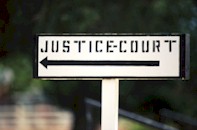
Court is dismissed. The judge has a few minutes to talk shop with me.
We soon find ourselves standing side by side, rocking on the balls of our feet, more as if we were talking about a new car he was modestly proud of than discussing a court.
The judge’s face becomes serious when he addresses next week’s docket, which includes two full-fledged jury trials. One will be for a young man accused of beating up his girlfriend. The other involves assault and battery in what was apparently a bar fight. Because a parole violation is in question, a young man could be sent to prison for three years.
The conversation shifts to jurisprudence in general.
The judge comes down strongly on what he sees as contemporary over-lenience. "Courts today," he says, "seem to be more interested in protecting criminals than they are in protecting society." He has sharp words for attorneys who win dismissals by bogging the courts down in technicalities. He says he’s eager to see the death penalty restored.
I’m beginning to think I can predict where he’ll stand on most issues.
I’m also starting to wonder what kind of treatment, say, blacks or first-time personal-use drug offenders might receive here in the People’s Court. But just as these concerns arise, the court’s presiding officer steps away from stereotypes. He criticizes the expense of black militant Angela Davis’ trial, not because he feels the security precautions and media accommodations were unwarranted, because the state "never had a case."
And it develops that one of his prime concerns is blind urban sprawl. He says he’s against flooding rural areas with so many new suburbanites that a judge can’t really know his people.
Our conversation trails off as the constable steps up his friendly pestering about lunch. The two men leave for a nearby truck stop.


